


Views: 0 Author: Site Editor Publish Time: 2025-09-26 Origin: Site


Camping and outdoor adventures offer a unique opportunity to disconnect from daily routines and immerse oneself in nature. Whether it’s a weekend getaway in the mountains, a beach picnic, or a multi-day trekking expedition, having a well-organized setup can make the experience more enjoyable and stress-free. One of the most critical aspects of outdoor preparation is efficient storage and organization of cooking equipment and supplies.
This is where the Outdoor Cooking Box shines. More than just a storage container, it serves as a versatile solution for campers, combining functionality, portability, and convenience. These boxes are designed not only to hold essential cooking tools, utensils, and ingredients but also to transform into a functional table or prep station during meals. Proper use of an Outdoor Cooking Box ensures campers can cook efficiently, maintain a tidy campsite, and quickly access everything they need.
To maximize the benefits of an Outdoor Cooking Box, it’s important to understand its core features and design principles. These boxes are carefully engineered to provide both storage and functional workspaces. Key characteristics include:
Foldable Tabletop and Adjustable Legs: The integrated tabletop can be unfolded and stabilized with adjustable legs, creating a convenient cooking or prep surface wherever you set up camp.
Foldable Partitions and Compartments: Inside the box, partitions can be arranged and secured using quick-release buckles. This allows campers to organize smaller items such as utensils, condiments, or portable stoves neatly.
Various Sizes and Capacities: Available in 50L, 65L, and 85L, the Outdoor Cooking Box can accommodate different group sizes and storage needs.
Durable and Weather-Resistant Materials: Crafted from aluminum alloy, these boxes are lightweight yet robust, with waterproof, fireproof, and anti-aging properties that ensure long-term usability.
Portability: Compact design and ergonomic handles make it easy to transport in cars, SUVs, or even on foot, allowing campers to maintain organization without compromising mobility.
By understanding these features, campers can plan their storage and setup strategies efficiently, ensuring a smooth outdoor cooking experience.
Preparation is the cornerstone of any successful camping adventure. An efficiently organized Outdoor Cooking Box not only saves time but also minimizes stress during your trip. By taking the time to plan and arrange your equipment before departure, you can ensure a seamless cooking and storage experience at the campsite. Here are detailed pre-trip organization strategies that every camper should consider:
Before you start packing, create a thorough inventory of all items you’ll need. This should include:
Cooking utensils (spatulas, tongs, knives)
Pots, pans, and portable stoves
Cleaning supplies (sponges, detergents, towels)
Food ingredients (dry goods, perishable items, condiments)
Safety items (fire extinguisher, gloves)
Double-checking this list ensures that nothing critical is left behind. A well-prepared checklist minimizes last-minute scrambling and ensures you can cook efficiently upon arrival.
Organization is greatly simplified when items are grouped logically. Consider dividing your gear into clear categories:
Utensils: Keep knives, forks, spoons, and other small tools together in a dedicated compartment.
Cooking Equipment: Group stoves, fuel canisters, pots, and pans separately.
Food Supplies: Separate dry and perishable items for easier management and to prevent spoilage.
Miscellaneous Tools: Include cutting boards, thermometers, and storage containers in one area.
This method allows you to locate what you need quickly, reducing the time spent searching through your box during meal prep.
Most Outdoor Cooking Boxes are equipped with adjustable partitions that can be configured to secure smaller items. By arranging the partitions:
Items remain stable during transport, preventing damage or spills.
Quick-release buckles allow for flexible reconfiguration depending on the type and number of items packed.
Compartments can be designated for high-priority items for instant access.
Proper use of partitions enhances orderliness and ensures that even delicate items, such as glass containers or lightweight tools, remain safe.
Packing isn’t just about fitting items inside the box; it’s about maintaining balance and accessibility:
Place heavier items at the bottom to lower the center of gravity and improve stability during transport.
Lighter or frequently used items should go on top for easy access.
Consider the weight distribution on each side of the box to prevent tipping, especially when lifting or moving the box over uneven terrain.
Following these strategies ensures a smooth and safe transport experience while keeping your cooking gear organized and accessible.
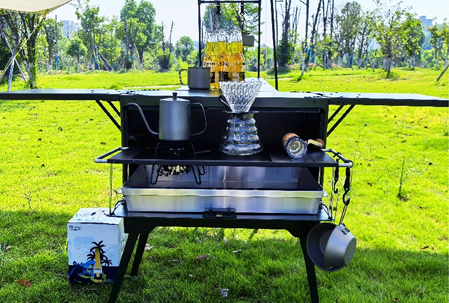
Once your items are packed, it’s important to optimize the available space to ensure that everything fits comfortably while remaining accessible. Here are several strategies to maximize storage efficiency:
Layering items strategically can reduce clutter and save time:
Top Layer: Place items you will use frequently, such as utensils, spices, or cutting boards, in the top layer for instant reach.
Middle Layer: Store medium-priority items like pots, pans, and containers in the middle.
Bottom Layer: Keep heavy or rarely used items, such as backup stoves or large cookware, at the bottom.
This technique minimizes the need to dig through multiple layers, keeping your campsite organized.
Many Outdoor Cooking Boxes feature expandable side panels that serve as support for the tabletop:
While unfolding the table, these panels can also act as storage for commonly used items.
Small utensils, spices, or cups can be placed temporarily on these surfaces during meal preparation.
Using side panels in this dual-purpose manner enhances overall workspace efficiency.
A lightweight stainless steel tray often comes included with the box:
Use it to hold small kitchen items, wash vegetables, or temporarily place hot pans.
The tray keeps items organized and prevents messes on the tabletop.
It can also be used to serve food or drinks, turning your box into a multifunctional station.
To further optimize space:
Place similar items into mesh bags, packing cubes, or waterproof pouches to keep them together.
Compression bags reduce bulk, allowing room for larger cookware or additional supplies.
Label bags for easier identification and faster setup at the campsite.
By combining layering, panel utilization, integrated trays, and packing bags, campers can fully maximize the storage potential of their Outdoor Cooking Box.
An Outdoor Cooking Box transforms into a functional hub once you set up camp. Maintaining organization during your trip ensures smooth meal prep and a clutter-free environment.
When unfolded, the box serves as a sturdy and reliable table:
Arrange utensils, ingredients, and cooking tools on the tabletop for streamlined access.
Use the T-shaped surface to prepare meals, serve food, or organize items for the next cooking session.
The table height can be adjusted to suit different activities, whether chopping vegetables or serving dishes.
Keep items you need most frequently close at hand:
Place knives, cutting boards, and spices in top compartments or front-facing sections.
Items stored in easily reachable areas minimize the need to dig through the box repeatedly, saving time and effort.
Outdoor environments are rarely flat, but adjustable legs allow campers to:
Maintain a level table surface on uneven ground.
Ensure safer meal prep by preventing spills or tipping of cookware.
Customize the height according to user comfort, whether standing or sitting while cooking.
Many boxes feature lockable compartments:
Safeguard fuel canisters, electronics, or personal items while you are away from the campsite.
Prevent unauthorized access and reduce the risk of accidental damage.
By keeping your Outdoor Cooking Box organized during your camping experience, you ensure convenience, safety, and efficiency, allowing you to focus on enjoying nature rather than managing clutter.
Use for Multiple Purposes:
Beyond cooking and storage, the Outdoor Cooking Box can serve as a beverage station, coffee brewing table, or picnic table for outdoor gatherings. Its versatility enhances its value on trips.
Labeling Compartments:
Labeling each partition or pouch with contents ensures quick access and reduces the likelihood of misplaced items.
Group Camping Strategy:
For group trips, assign different boxes for various tasks—one for cooking, one for utensils, and another for food storage. This improves efficiency and prevents cross-contamination.
Portable Organization Hacks:
Add hooks, small mesh bags, or clip-on containers to increase available storage without cluttering the tabletop. This is especially useful when camping in limited spaces or transporting multiple items.
With these creative hacks, campers can maximize the usability of their Outdoor Cooking Box and enjoy a more organized, enjoyable outdoor experience.
An Outdoor Cooking Box is more than just a storage container—it’s an essential companion for campers seeking efficient storage, easy access, and functional cooking solutions. By implementing proper storage and organization techniques, including pre-trip preparation, intelligent layering, and careful maintenance, campers can enhance both the convenience and safety of their outdoor adventures.
A well-organized Outdoor Cooking Box allows for quick meal preparation, tidy campsite management, and secure storage of valuable items. Its durable, foldable design ensures versatility, whether it’s used as a tabletop, prep station, or multipurpose camping accessory.
For campers looking to elevate their outdoor experience, investing in a high-quality, multi-functional Outdoor Cooking Box is a smart choice. Professionals at Ningbo Atechsafe Electrical Technology Co., Ltd. offer premium solutions with various sizes, adjustable features, and durable materials that cater to diverse camping needs. Explore their offerings to find the perfect Outdoor Cooking Box to enhance your next camping adventure.


