


Views: 0 Author: Site Editor Publish Time: 2025-10-15 Origin: Site


In modern heating, ventilation, and air conditioning (HVAC) systems, maintaining optimal airflow and energy efficiency is a constant challenge. Among the various components that ensure smooth operation, Butterfly Backdraft Dampers play a critical role. These devices are designed to regulate airflow, prevent backflow, and protect HVAC equipment from potential damage caused by reverse air currents. In this article, we will explore the importance, functionality, types, and installation considerations of butterfly backdraft dampers, providing a comprehensive guide for engineers, facility managers, and HVAC professionals.
A Butterfly Backdraft Damper is a type of mechanical damper used in ductwork to allow air to flow in one direction while preventing reverse airflow. It is often installed in ventilation ducts, exhaust systems, and air handling units where backflow could disrupt system performance or compromise indoor air quality. The damper consists of a circular or rectangular frame, a central shaft, and a pivoting disc or “butterfly” that swings open when air flows in the correct direction and closes automatically when airflow reverses.
Unlike traditional gravity or blade dampers, butterfly backdraft dampers are lightweight, compact, and capable of responding quickly to changes in airflow. This makes them suitable for both industrial and commercial HVAC applications.
Backflow in HVAC systems occurs when fans stop operating, when duct pressures fluctuate, or when external forces such as wind or building stack effect push air in the opposite direction. This reverse airflow can create several problems:
Contaminated Air: Clean or conditioned spaces can be exposed to pollutants, smoke, or odors from other areas.
Equipment Damage: Sensitive components like air handling units, fans, and heating or cooling coils can experience stress or corrosion from sudden reverse airflow.
System Inefficiency: Unchecked backflow may disturb pressure balance, affecting airflow distribution across different zones.
Butterfly backdraft dampers serve as a reliable barrier, automatically closing to block reverse airflow. Their quick-acting design ensures that backflow is minimized almost instantaneously, protecting both the indoor environment and the HVAC system itself.
Energy efficiency is a top priority in modern HVAC systems. Uncontrolled reverse airflow forces fans and compressors to compensate for lost pressure, which can lead to:
Higher Energy Consumption: Fans must work harder to maintain airflow, increasing electricity use.
Operational Cost Increase: Energy loss translates directly into higher utility bills and maintenance expenses.
Wear and Tear: Overworked fans and motors are prone to premature failure.
By preventing reverse airflow, butterfly dampers maintain consistent duct pressure and airflow direction. This ensures that the HVAC system operates within its designed parameters, reducing energy waste and lowering operational costs over time.
Maintaining indoor air quality (IAQ) is essential, especially in critical environments such as hospitals, laboratories, and industrial facilities. Backdraft dampers contribute to IAQ by:
Blocking Pollutants: Preventing dust, smoke, chemical fumes, or pathogens from entering the ventilation system.
Odor Control: Ensuring that unwanted odors do not travel from exhaust ducts back into conditioned spaces.
Temperature and Humidity Control: By maintaining proper airflow, dampers help ensure that temperature and humidity levels remain stable, which is critical for comfort and health.
In environments like healthcare facilities or cleanrooms, even minor backflow can compromise safety standards. Butterfly backdraft dampers act as a passive yet crucial safeguard in these sensitive applications.
HVAC equipment is a significant investment. Sudden or continuous backflow can accelerate wear and tear, causing:
Mechanical Stress: Reversed airflow can strain fan blades, bearings, and shafts.
Coil Damage: Heating or cooling coils may experience uneven air pressure, leading to leaks or reduced efficiency.
Fan Failure: Repeated backflow can lead to motor overload or imbalance in high-speed fans.
Installing butterfly backdraft dampers reduces the risk of mechanical damage, extends the lifespan of equipment, and decreases the frequency and cost of maintenance.
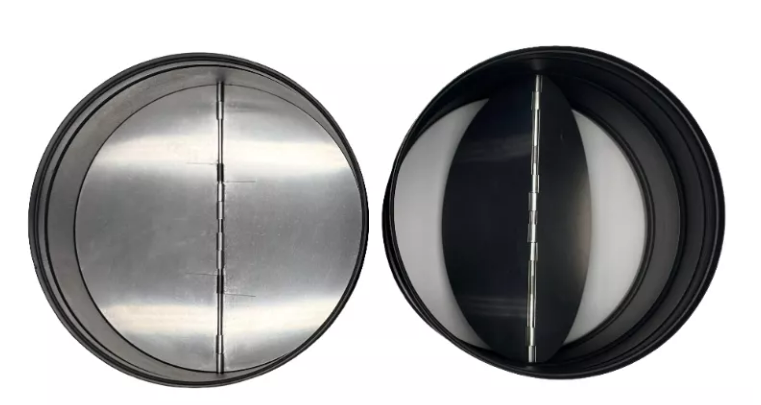
Butterfly backdraft dampers are versatile and come in multiple designs to suit varying system requirements. Understanding the types helps in selecting the right damper for a specific application.
Manual Dampers:
Require human intervention to open or close.
Commonly used in low-traffic areas, specialized ventilation, or emergency systems where precise control is needed.
Advantages include simple design and low cost, but they require periodic monitoring.
Automatic Dampers:
Operate without manual input, relying on air pressure, spring mechanisms, or actuators to respond to airflow changes.
Ideal for large commercial HVAC systems or industrial exhaust systems.
Offer quick response times and consistent performance even in fluctuating airflow conditions.
Spring-Loaded Dampers:
Equipped with a spring mechanism to ensure the disc closes promptly.
Provides higher reliability in preventing even minimal backflow.
Suitable for high-pressure ductwork or critical environments where precision airflow control is necessary.
Gravity-Operated Dampers:
Use the weight of the disc to close when airflow stops.
Simpler design, cost-effective, and requires minimal maintenance.
Less responsive than spring-loaded dampers, making them more suitable for residential or low-pressure applications.
Material selection is crucial, as dampers are exposed to different environmental conditions:
Galvanized Steel:
Durable, corrosion-resistant, and ideal for general HVAC applications.
Common in commercial and industrial ventilation systems.
Stainless Steel:
Highly resistant to corrosion and chemical exposure.
Suitable for humid environments, chemical exhaust systems, and high-temperature applications.
Aluminum:
Lightweight and corrosion-resistant.
Often used in commercial and residential HVAC systems where weight reduction is important.
PVC or Plastic:
Resistant to chemical corrosion and lightweight.
Used in chemical exhaust systems, laboratories, and specialized lightweight ventilation systems.
By carefully selecting the appropriate material and type, engineers can ensure that butterfly backdraft dampers perform efficiently under specific operating conditions, protecting both equipment and the indoor environment.
When selecting and installing a butterfly backdraft damper, several factors should be taken into account:
The damper must match the duct size and airflow requirements. An undersized damper can restrict airflow, while an oversized damper may not close effectively, allowing backflow.
Understanding the system's static pressure and airflow rate is essential to ensure the damper opens and closes appropriately. High-pressure systems may require reinforced damper discs or additional spring tension.
Material selection depends on the temperature of the air or gases passing through the duct. For example, stainless steel is preferable in high-temperature exhaust systems, while galvanized steel works well in standard ventilation.
Butterfly backdraft dampers require periodic inspection and cleaning to prevent dust buildup or mechanical wear. Installing dampers in accessible locations simplifies maintenance and ensures long-term performance.
Correct installation is crucial for optimal damper performance:
Orientation: Install the damper in the correct orientation relative to airflow. Most dampers have arrows indicating the intended airflow direction.
Clearances: Allow adequate space around the damper for the disc to swing freely without obstruction.
Sealing: Ensure proper sealing to prevent air leakage around the damper frame.
Support: In large ducts, provide additional structural support to prevent sagging or vibration that may affect damper operation.
Testing: After installation, test the damper’s opening and closing under normal operating conditions to confirm proper function.
Butterfly backdraft dampers are versatile and widely used in various HVAC and ventilation systems:
Commercial Buildings: Offices, malls, and hotels to maintain indoor air quality and prevent reverse airflow.
Industrial Facilities: Factories, warehouses, and plants for exhaust and fume control.
Healthcare Settings: Hospitals, laboratories, and cleanrooms to prevent contamination.
Residential Systems: In multi-story buildings, dampers prevent air from traveling between units through shared ducts.
Energy Recovery Systems: Protect energy recovery ventilators from reverse airflow during fan shutdowns.
Feature | Benefit |
Lightweight design | Easy to install and maintain |
Fast-acting closure | Prevents backflow effectively |
Versatile materials | Suitable for diverse environmental conditions |
Compact size | Minimal space requirements in ductwork |
Energy savings | Reduces unnecessary fan load and operational costs |
To ensure long-lasting performance, regular maintenance is essential:
Inspect dampers every 6–12 months for dust, debris, or mechanical wear.
Clean pivot points and disc surfaces to ensure smooth operation.
Lubricate moving parts if applicable, using manufacturer-recommended lubricants.
Check for proper alignment and reseal if air leakage is detected.
Proper maintenance prolongs the lifespan of the damper and protects the HVAC system from potential damage.
Butterfly Backdraft Dampers are a vital component of any efficient HVAC system. By preventing reverse airflow, enhancing energy efficiency, protecting equipment, and maintaining indoor air quality, these dampers contribute significantly to the performance and reliability of modern ventilation systems. Choosing the right damper, installing it correctly, and performing regular maintenance are essential steps to maximize its benefits.
For high-quality butterfly backdraft dampers and professional guidance on HVAC solutions, you can explore the offerings at Ningbo Atechsafe Electrical Technology Co., Ltd. Their expertise in manufacturing and supplying reliable HVAC components makes them a trusted partner for both commercial and industrial projects.


