


Views: 0 Author: Site Editor Publish Time: 2026-03-30 Origin: Site


Deep Drawing Parts are integral to many industries, especially in producing components for automotive, aerospace, electronics, and consumer goods. The deep drawing process allows manufacturers to create complex, three-dimensional parts from flat sheet metal. While this process is primarily known for producing simple shapes such as cups, enclosures, and containers, it is also capable of producing intricate geometries. However, producing parts with complex geometries through deep drawing requires a deeper understanding of material properties, die design, and the equipment used. This article explores whether Deep Drawing Parts can be produced with complex geometries, what factors influence this ability, the challenges involved, and how advances in technology have made it possible to achieve even more intricate designs.
Deep drawing is a sheet metal forming process where a flat metal sheet is transformed into a three-dimensional part by applying pressure to the material through a punch and die. The material is drawn into a cavity by the punch, and the shape is formed by the material's flow into the die cavity.
While deep drawing is widely used for producing simple shapes such as cylindrical cups, the process can also accommodate parts with deeper and more complex geometries. The versatility of deep drawing largely depends on the material's ductility, the design of the die, and the type of machinery used.
Creating Deep Drawing Parts with complex geometry requires careful consideration of multiple factors. A key aspect is the die design, which can be customized to include features like bends, grooves, or multiple contours. The die’s geometry must be optimized to ensure that the material flows evenly without causing defects such as wrinkling or thinning. Additionally, modern CNC press brakes and simulation software have made it easier to control the process and ensure that intricate shapes are achievable.
One of the most important factors in producing Deep Drawing Parts with complex geometries is the material’s properties. The material must have sufficient ductility, strength, and formability to undergo significant deformation without cracking or tearing. Materials such as low-carbon steel, aluminum, and copper are commonly used in deep drawing, as they exhibit the necessary qualities for forming complex shapes.
Material Property | Effect on Deep Drawing |
Ductility | High ductility is essential for forming complex shapes without cracking. |
Strength | Adequate strength ensures that the material can withstand applied forces. |
Formability | Good formability allows the material to flow smoothly into the die cavity. |
Thickness | Thicker materials are harder to form and may require more force or additional steps. |
The selection of material thickness is also crucial. Thicker materials require more force to draw and may experience issues such as thinning or wrinkling. Conversely, very thin materials may be more prone to tearing, especially when drawing complex shapes.
The design of the die is another crucial factor that influences the ability to produce Deep Drawing Parts with complex geometry. Custom die designs are often required to create intricate shapes, such as deep cavities, sharp corners, or multi-level features. Multi-stage dies are used in some cases to achieve highly detailed parts. The die must be carefully crafted to match the part design, allowing for smooth material flow and preventing defects such as wrinkling or excessive thinning.
Single-Stage Dies: Ideal for simple shapes like cups or containers.
Multi-Stage Dies: Used for more complex shapes, involving multiple forming stages to gradually shape the part.
Progressive Dies: Allow for multiple operations in a single pass, creating very complex shapes in a continuous process.
The machinery used in deep drawing also plays a significant role in producing complex parts. The press force required for deep drawing depends on the material being used, its thickness, and the geometry of the part. High-precision presses, such as CNC-controlled machines, are used to maintain consistent force and ensure the accuracy of the drawn part.
Deep Drawing Parts can be produced with a variety of complex geometries, depending on the application. Some common examples include:
Car body panels, structural components, and safety parts are often produced through deep drawing. These parts require a high level of precision to ensure proper fit and function.
Example: Complex body panels with curves, holes, and precise bends are often deep drawn using multi-stage dies.
Aerospace components such as aircraft skins, turbine parts, and enclosures require both lightweight materials and intricate geometries, making deep drawing an ideal process.
Example: Aerospace brackets and housings that combine strength with complex features like mounting holes and curves.
In electronics, deep drawing is used to produce housings and enclosures that protect sensitive components.
Example: Computer cases and electrical enclosures with sharp corners, contours, and holes are deep drawn for both strength and aesthetic appeal.
Medical components, such as surgical instruments and enclosures for diagnostic equipment, often require deep drawing due to their precise geometries and material demands.
Example: Stainless steel surgical trays or complex medical instrument enclosures.
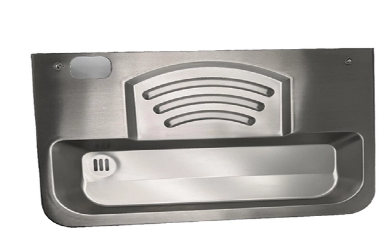
While deep drawing is capable of producing complex geometries, it is not without its challenges. Some of the most common challenges include:
Material thinning occurs when the metal stretches too much, leading to a loss of material thickness in critical areas. This can weaken the part and may require additional forming stages to resolve.
Wrinkling occurs when the material buckles instead of stretching. This is often caused by insufficient blank holder force or poor die design, resulting in uneven material flow.
Cracking happens when the material is not sufficiently ductile to handle the stretching required in deep drawing. This is more likely to occur in materials with low ductility or when the material thickness is too high.
High press force is required for more complex geometries, but excessive force can cause damage to both the material and the tooling, leading to high costs and time delays.
In recent years, advancements in tooling technology, simulation software, and CNC presses have greatly improved the ability to produce complex Deep Drawing Parts.
Tooling: The development of precision tooling, such as multi-stage and progressive dies, has made it possible to produce more intricate geometries in fewer steps.
Simulation Software: Modern software enables manufacturers to simulate the deep drawing process before production begins. This helps optimize die design, material selection, and press force, ensuring the part can be produced without defects.
CNC Machines: CNC-controlled presses provide the high precision needed to produce complex parts with exact specifications. This enables consistent production of detailed components with high accuracy.
Yes, deep drawing can be used to create parts with multiple features, including bends, holes, and ribs. The tooling and die design can be adjusted to accommodate these complexities. By modifying the shape and configuration of the die, manufacturers can achieve intricate features, such as deep pockets, slots, or embossed shapes, all in one drawing process. Advanced die designs, such as multi-stage or progressive dies, are often used to handle the additional complexity involved in creating multi-featured parts.
Material thickness plays a critical role in the deep drawing process. Thicker materials require more force to form, and this can lead to issues like thinning, wrinkling, or cracking, especially in parts with complex shapes. Conversely, thinner materials are more easily drawn but may tear or fail if the forming forces are not properly controlled. Selecting the correct material thickness is essential to avoid defects during deep drawing, as it directly impacts the material's ability to flow smoothly into the die cavity while maintaining strength and structural integrity.
While deep drawing is highly versatile, there are limits to the complexity of shapes that can be produced, particularly when dealing with sharp corners, very deep parts, or parts with extreme features. Such geometries may require additional processes like hydroforming, which uses fluid pressure to create more intricate shapes, or progressive dies, which allow for more stages of forming. For extremely complex or tight geometries, a combination of processes may be necessary to achieve the desired results without compromising material integrity.
Wrinkling and thinning are common issues in deep drawing, especially when forming complex geometries. To control these issues, manufacturers can adjust several factors:
Material Properties: Using materials with higher ductility allows for better material flow, reducing the risk of thinning or cracking.
Blank Holder Force: Optimizing the blank holder force ensures that the material is held securely during the drawing process, preventing wrinkling.
Die Design: Customizing the die design to improve material flow and minimize friction can reduce both wrinkling and thinning. Adding features like corner radii or reducing sharp angles in the die can also help.
Deep Drawing Parts can be produced with complex geometries, but achieving high-quality results requires careful attention to material properties, die design, and machinery. Modern tooling, simulation software, and CNC presses have made it easier to create intricate designs with precision. Despite challenges such as material thinning, wrinkling, and cracking, advancements in technology and process optimization are helping manufacturers overcome these issues. These innovations are enabling the production of Deep Drawing Parts with greater complexity, functionality, and efficiency, meeting the increasingly demanding requirements of various industries.


