


Views: 0 Author: Site Editor Publish Time: 2025-10-09 Origin: Site


Ever wondered how airflow is controlled in HVAC systems? Butterfly dampers play a crucial role. These devices regulate air efficiently, ensuring comfort and energy savings. In this post, you'll learn about butterfly backdraft damper, their purpose, and their importance in HVAC systems. Discover how they optimize airflow and enhance system performance.
A butterfly damper is a device used to control airflow inside ducts or pipes. It consists mainly of a circular metal disc, called the vane, mounted on a spindle that runs through its center. This disc rotates to either block or allow air to pass through. The spindle connects to an actuator or handle, which turns the disc. The damper housing holds the disc and spindle in place and often includes seals made of metal or elastomeric materials to prevent air leakage when closed.
The operation is simple yet effective. When the spindle rotates 90 degrees, the disc moves from a fully open position, aligned with the airflow, to a fully closed position, perpendicular to it. This rotation controls the amount of air flowing through the duct. Partial rotation allows for precise regulation of airflow, balancing pressure and volume as needed. The quick-turn nature of the disc enables fast response times, making adjustments easy and efficient.
Butterfly dampers differ from other damper types like multi-blade or louvered dampers. While multi-blade dampers have several blades that open and close to regulate airflow, butterfly dampers have a single disc. This design offers several advantages:
● Space-saving: Butterfly dampers require less space due to their compact design.
● Cost-effective: They are generally cheaper to manufacture and install.
● Lightweight: Their simple construction reduces weight compared to multi-blade dampers.
● Quick operation: The 90-degree rotation allows rapid opening or closing.
However, multi-blade dampers can provide more precise airflow control over a wider range, especially in larger or more complex systems. Butterfly dampers excel in applications where quick on/off control or moderate modulation is sufficient.
Butterfly dampers are essential for controlling airflow in HVAC systems and industrial processes. By rotating the disc inside the duct, they adjust how much air passes through. This makes it easy to balance airflow between different rooms or sections of a facility, ensuring consistent ventilation. For example, in a large office building, butterfly dampers help maintain comfortable air distribution, preventing some areas from becoming stuffy while others get too much air. Their quick 90-degree turn allows rapid changes to airflow, making them ideal for systems needing fast adjustments.
Maintaining proper pressure in ducts and pipes is crucial for system efficiency and safety. Butterfly dampers help by partially closing or opening to regulate pressure levels. When airflow is restricted, pressure upstream increases, and downstream pressure drops, allowing precise control. This is especially important in industrial settings where pressure fluctuations can affect equipment performance or safety. For instance, in a chemical plant, butterfly dampers manage airflow to maintain stable pressure, preventing damage to sensitive machinery.
Optimizing airflow and pressure reduces energy waste. Butterfly dampers contribute by allowing systems to operate at ideal conditions, avoiding over-ventilation or excessive fan power. By fine-tuning airflow, they help HVAC systems consume less electricity, lowering operational costs. Their compact design minimizes pressure drop, which means fans don't have to work harder to push air through ducts. This efficiency is key in large commercial buildings aiming to reduce energy bills and meet sustainability goals.
Butterfly dampers are known for their compact size. Their single-disc design requires less space inside ducts compared to multi-blade or louvered dampers. This makes them ideal for installations where space is tight or ductwork is constrained. Because the disc rotates within the duct, it doesn’t need extra room beyond the duct diameter, allowing engineers to save valuable building or equipment space. This compactness also simplifies duct layout and reduces material costs.
One of the key advantages of butterfly dampers is their fast operation. The disc typically rotates only 90 degrees to fully open or close, meaning adjustments happen quickly. This rapid movement allows for swift airflow changes in response to system demands or environmental conditions. For example, in HVAC systems, they can quickly balance air distribution between zones or react to sudden pressure changes. This speed improves overall system control and responsiveness, helping maintain comfort and safety.
Butterfly dampers are built to last. They often use robust materials like stainless steel or coated metals, which resist corrosion, wear, and extreme temperatures. The simple design means fewer moving parts that can fail or require repair. Maintenance is usually straightforward, involving periodic inspection and lubrication of the spindle or actuator. When installed properly, they provide reliable service over many years, reducing downtime and replacement costs. Their durability makes them suitable for harsh industrial environments as well as commercial HVAC systems.
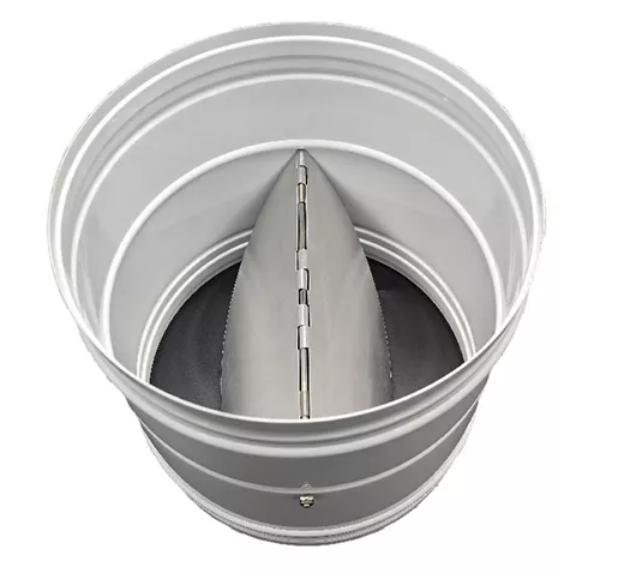
Installing a butterfly damper correctly is essential for smooth operation and long service life. First, ensure the damper disc rotates freely inside the duct without touching the sides or flanges. The disc often extends beyond the valve body, so clearance is critical to avoid obstruction. Position the damper stem vertically, with the actuator mounted directly above it for optimal control and accessibility.
Maintain a minimum distance of six pipe diameters between the damper and other fittings like elbows, pumps, or valves. This spacing prevents turbulent airflow that can cause wear or reduce efficiency. If six diameters aren’t possible, maximize the distance as much as the layout allows. When a butterfly damper is near a check valve, leave enough gap to prevent the damper disc from hindering the check valve’s movement.
During installation, avoid compressing the damper’s seat material. The seat seals both sides of the disc and usually doesn’t require extra gaskets. Over-compression can cause uneven wear, leading to leaks and premature failure. Align the damper carefully to avoid strain on the spindle and actuator, ensuring smooth 90-degree rotation.
Most butterfly damper problems stem from poor installation or lack of maintenance. The seat material often wears unevenly if compressed or damaged, causing air leaks. Dirt, dust, and debris can accumulate on the disc or spindle, hindering movement and sealing. Corrosion may occur if the damper is exposed to moisture or harsh chemicals, especially if made from less durable materials.
Actuators or handles can become stiff or fail if lubrication is neglected. Seals may degrade over time, especially elastomeric types, requiring inspection and replacement. Loose mounting bolts or misalignment can cause vibration and noise, affecting system performance.
● Inspect dampers regularly for dirt, corrosion, and wear.
● Lubricate the spindle and actuator as recommended by the manufacturer.
● Ensure the damper disc rotates freely without binding.
● Avoid compressing or damaging the seat during installation or maintenance.
● Use corrosion-resistant materials in harsh environments.
● Keep sufficient clearance around the damper for airflow and movement.
● Schedule periodic professional inspections to catch issues early.
Following these steps helps butterfly dampers operate efficiently for many years, reducing downtime and costly repairs. Proper installation paired with routine maintenance ensures reliable airflow control and energy savings.
Selecting the right butterfly damper depends on several key factors. First, consider the size of your duct or pipe. The damper must fit properly to ensure smooth operation and an effective seal. Next, evaluate the pressure and temperature conditions of your system. Some dampers are designed to handle high temperatures or pressures, while others are better suited for standard HVAC environments.
Material choice matters too. Stainless steel or coated metals resist corrosion and wear, making them ideal for harsh industrial settings. Elastomeric seals provide tight shutoff but may degrade faster in aggressive environments. Also, think about the type of actuator needed—manual handles, electric, or pneumatic actuators each have pros and cons depending on your control system.
Finally, consider the airflow control precision required. Butterfly dampers offer quick open/close action but may not provide the fine modulation some systems need. If you need precise airflow regulation, look for dampers with adjustable or multi-position actuators.
Butterfly dampers come in various designs and qualities. Some models feature single-thickness discs, while others use double-skin airfoil discs that reduce pressure drop and improve efficiency. High-end models may include advanced sealing systems to reduce leakage and increase energy savings.
Consider the damper’s mounting style too. Wafer-style dampers fit between flanges and save space, while lug-style dampers have threaded inserts for easier installation and removal without disturbing the piping.
Price often reflects build quality and features. Cheaper dampers might save upfront costs but could require more maintenance or have shorter lifespans. Investing in a reputable brand with proven durability can save money over time.
Different industries demand unique damper features. For HVAC systems in commercial buildings, lightweight, corrosion-resistant dampers with quick response times are ideal. In chemical or mining plants, choose dampers built from robust materials that resist corrosion and abrasion.
Wastewater treatment facilities often require butterfly dampers with bubble-tight seals to prevent leakage of harmful gases. Power plants may need dampers rated for high temperatures and pressures, with actuators designed for remote control and automation.
In food processing, sanitary-grade dampers made from stainless steel with smooth surfaces help meet hygiene standards. Always check industry regulations and standards to ensure your damper complies.
Butterfly dampers are essential for controlling airflow and pressure in various systems. They offer space-saving design, quick response, and durability. These dampers are ideal for HVAC and industrial applications, providing efficient airflow regulation and energy savings. Proper installation and maintenance ensure long-lasting performance. When choosing a butterfly damper, consider factors like size, material, and actuator type. METECHWORKS offers high-quality butterfly dampers that deliver reliable performance and value, making them a smart choice for diverse industry needs.
A: A Butterfly Backdraft Damper is a device used to control airflow in ducts, utilizing a rotating disc to either allow or block air passage.
A: It works by rotating a disc 90 degrees to open or close, regulating airflow and pressure within a duct system.
A: The Butterfly Backdraft Damper is space-saving, cost-effective, lightweight, and offers quick operation compared to multi-blade dampers


