


Views: 0 Author: Site Editor Publish Time: 2026-03-24 Origin: Site


Deep Drawing Parts are widely used in manufacturing to create complex, three-dimensional shapes from flat sheet metal. This process involves using a die and punch to draw the material into a cavity, resulting in seamless, deep components that are commonly found in industries such as automotive, aerospace, and consumer goods. The selection of materials for deep drawing is crucial because different materials have varying degrees of formability, ductility, and strength, which directly affect the quality and performance of the final product. Materials that are too brittle may crack during the drawing process, while those with insufficient strength may result in parts that are too thin or prone to deformation. Therefore, choosing the right material ensures that Deep Drawing Parts maintain their integrity, meet design specifications, and are suitable for their intended application.
In Deep Drawing Parts production, selecting the right material is crucial for achieving high-quality, defect-free parts. The material's properties directly affect how well it can be shaped and its performance in the final product. Poor material selection can result in cracks, wrinkles, or deformation during the drawing process.
Material properties like ductility, strength, and formability play a key role in determining the success of the deep drawing process. Ductile materials can stretch without breaking, while strong materials prevent failure under high stress. Formable materials allow the metal to flow into the die cavity without defects.
Ductility
Ductility is essential for deep drawing. Materials with high ductility, such as aluminum and mild steel, can be stretched without breaking and are ideal for forming complex shapes.
Strength
Strength is important to ensure the material can withstand the forces applied during deep drawing. However, materials with excessive strength may crack, so a balance with ductility is necessary.
Formability
Formability is how easily a material can be shaped. Materials with good formability, such as aluminum, allow for smooth deformation into the die cavity without wrinkles or tearing.
Material Thickness
Thicker materials require more force and may experience issues like thinning or cracking. The thickness must be balanced for optimal drawing performance.
Work Hardening Rate
Some materials, like high-strength steels, work-harden during deep drawing, becoming stronger as they are deformed. While beneficial for part strength, it requires careful process control.
Surface Quality
The surface finish of the material is crucial for reducing defects. Materials with smooth surfaces are preferred to avoid cosmetic issues during the process.
Choosing the right material is crucial for producing high-quality Deep Drawing Parts. The material properties, such as strength, ductility, and formability, directly impact the process and final part quality. Below are the most common materials used in deep drawing:
Steel, especially low-carbon steel, is a popular choice for deep drawing due to its excellent formability and strength.
Low-Carbon Steel: Known for high ductility, it is easy to shape without cracking, making it ideal for high-volume production.
High-Strength Steel: Offers better mechanical properties but requires more force for forming, ideal for parts needing durability under stress.
Applications: Automotive body parts, appliance components, structural elements.
Aluminum is lightweight, easy to form, and corrosion-resistant, making it an excellent choice for many industries.
Lightweight: Aluminum is ideal for reducing weight in applications like aerospace and automotive.
Versatile: Suitable for a variety of shapes, making it adaptable for complex designs.
Applications: Automotive parts, aerospace components, packaging.
Copper and brass are used for their excellent electrical conductivity and corrosion resistance.
Copper: Ideal for electrical and thermal applications.
Brass: An alloy of copper and zinc, with good formability and corrosion resistance.
Applications: Electrical connectors, heat exchangers, decorative parts.
Stainless steel is known for its durability, corrosion resistance, and high strength.
Durability: Withstands wear and tear, perfect for harsh environments.
Corrosion Resistance: It is ideal for parts exposed to moisture or chemicals.
Applications: Kitchenware, medical instruments, automotive parts.
Materials like magnesium alloys and titanium are used for specialized applications due to their unique properties.
Magnesium Alloys: Lightweight, ideal for reducing part weight, but difficult to form.
Titanium: Offers high strength, corrosion resistance, and is used in demanding applications.
Applications: Aerospace, automotive, medical implants.
Material | Advantages | Disadvantages | Applications |
Steel (Low-Carbon) | High formability, cost-effective | Lower strength compared to high-strength steel | Automotive, appliances |
Steel (High-Strength) | High tensile strength, durability | Requires more force to form | Car chassis, heavy machinery parts |
Aluminum | Lightweight, corrosion-resistant, easy to form | Less strength than steel | Aerospace, automotive, packaging |
Copper | Excellent conductivity, corrosion-resistant | Expensive, weaker than steel | Electrical components, heat exchangers |
Brass | Corrosion-resistant, good formability | Expensive, weaker than steel | Decorative parts, electrical fittings |
Stainless Steel | High strength, durable, corrosion-resistant | Difficult to form, high cost | Kitchenware, medical instruments |
Magnesium Alloys | Lightweight, good for weight reduction | Difficult to form, expensive | Automotive, aerospace |
Titanium | High strength-to-weight ratio, corrosion-resistant | Expensive, hard to form | Aerospace, military, medical implants |
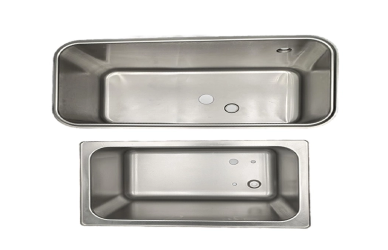
Choosing the right material for Deep Drawing Parts is essential to ensure the final product meets specific performance and durability requirements. Different industries such as automotive, electronics, and consumer goods have unique material needs, and understanding how material properties affect design and performance is crucial for optimizing the deep drawing process.
Automotive Industry
In the automotive sector, parts need a balance of strength, durability, and weight reduction. Low-carbon steel, high-strength steel, and aluminum are commonly used.
Low-carbon steel is ideal for body panels, providing good formability and cost-effectiveness.
High-strength steel is used for safety-critical parts like crash components.
Aluminum is often used for lightweight parts, like body panels and engine components.
Electronics Industry
For electronics, materials like copper, brass, and stainless steel are chosen for their conductivity and corrosion resistance.
Copper is perfect for connectors and heat exchangers due to its excellent conductivity.
Brass is used for connectors and fittings due to its corrosion resistance and formability.
Stainless steel is used for enclosures because of its durability and corrosion resistance.
Consumer Goods
Stainless steel, aluminum, and tinplate are commonly used in consumer goods due to their cost-effectiveness, durability, and aesthetic appeal.
Stainless steel is used in kitchenware and appliances due to its resistance to corrosion.
Aluminum is used in packaging and lightweight appliances.
Tinplate is used in food packaging, providing durability and resistance to rust.
The properties of materials directly affect the deep drawing process and the performance of the final part. Key factors to consider are:
Ductility
High ductility allows materials to stretch and form complex shapes without cracking. Materials like low-carbon steel, aluminum, and copper offer excellent ductility, making them ideal for deep drawing.
Example: Automotive panels made of low-carbon steel can form large, complex shapes without failure.
Strength
Materials with high strength, like high-strength steel and stainless steel, ensure parts can withstand stress without fracturing. These materials are critical for safety components.
Example: High-strength steel in crash components ensures they can resist impact forces.
Formability
Good formability is necessary for materials to be shaped without defects. Materials like aluminum and brass offer excellent formability for deep drawing.
Example: Brass is ideal for forming precise components like connectors in electronics.
Corrosion Resistance
Materials like stainless steel, brass, and aluminum resist corrosion, making them suitable for applications exposed to moisture or chemicals.
Example: Stainless steel is used in kitchen appliances because it resists rust and stains.
Surface Quality
A smooth surface finish is important for aesthetics and functionality. Materials like stainless steel and aluminum are chosen for their ability to achieve a high-quality surface.
Example: Aluminum is used for food packaging as its smooth surface is ideal for printing and provides an attractive finish.
Materials with high ductility and good formability are ideal for deep drawing, as they allow for stretching without cracking or wrinkling.
Yes, aluminum is commonly used for deep drawing due to its lightweight and formable nature, especially in applications like automotive and consumer goods.
Stainless steel is suitable for deep drawing, particularly in applications requiring corrosion resistance, durability, and strength, such as in kitchenware or industrial components.
Thicker materials are harder to form and may require more force or additional techniques to avoid defects like wrinkling, while thinner materials are more easily drawn but may be prone to tearing or thinning.
Choosing the right material for Deep Drawing Parts is essential to ensuring the performance, durability, and manufacturability of the final product. Materials such as low-carbon steel, high-strength steel, aluminum, and stainless steel are commonly used, each offering unique properties suited to different applications. Low-carbon steel is ideal for automotive body panels and components due to its excellent formability, while high-strength steel is preferred for safety-critical parts like crash components, offering superior strength and durability. Aluminum is widely used in industries where lightweight parts are needed, such as in the automotive and aerospace sectors, while stainless steel is selected for parts requiring resistance to corrosion, such as kitchenware and medical instruments. Material properties like ductility, strength, and corrosion resistance play a key role in determining how well a material will perform during the deep drawing process. For example, high ductility ensures that the material can be stretched and formed into complex shapes without cracking, while high strength ensures that the part can withstand stress without failing. Corrosion-resistant materials are particularly important for parts exposed to moisture or chemicals. Ultimately, selecting the right material based on the application and understanding how its properties influence the deep drawing process ensures the production of high-quality, functional components.


